
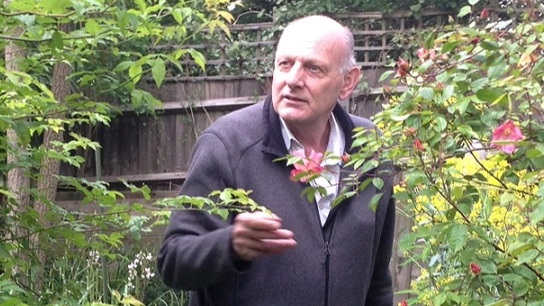
The East London Garden Society has been at the forefront of making significant changes for local gardeners.
As you may be aware recycling laws are changing, the first stage being food waste recycling.
The Aerobic method of organic waste recycling allows communities to make a nutrient rich soil from their own food waste. This method was recommended to Tower Hamlets Council and they were considering offering finance for a trial period, but instead they introduced food waste bins on the streets, as did other London boroughs.
However, in Tower Hamlets the bins were soon withdrawn because of users persistently contaminating the bins with non-food products.
The conclusion is that having a conversation with your local authority will never bring results as they seem unable to accept ideas involving new systems which could improve the lives of residents.
Tower Hamlets, have the worst record in the UK for recycling and they lack the ability to have community engagement. Without that, no new ideas will be introduced.
If you value having someone campaign on your behalf to protect the environment and having access to useful articles about gardening and local environmental matters, please make a donation to help us with the cost of maintaining The East London Garden Society.
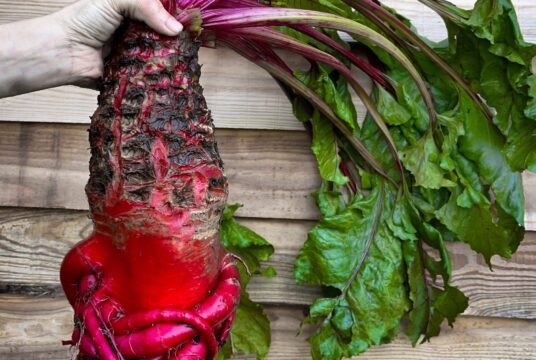
Mangelwurzel is originally German. The first part is the old word Mangold, meaning beet or chard (the latter being the green leaves from a variety of beet). The second part is Wurzel, a root. Germans became confused about the first part several centuries ago and thought it was instead Mangel, a shortage or lack.
The mangelwurzel, often referred to as mangold or fodder beet, is a large, fleshy-rooted member of the beet family, closely related to beetroot and sugar beet. Developed in the 18th century, it was designed primarily as a nutritious, hardy fodder crop for livestock in Europe before becoming a staple for human survival during wartime shortages.
Contemporary use is primarily for cattle, pig and other stock fodder, although it can be eaten, especially when young, by humans. Considered a crop for cool-temperate climates, the mangelwurzel sown in autumn can be grown as a winter crop in warm-temperate to subtropical climates. Both leaves and roots may be eaten.
Leaves can be lightly steamed for salads or lightly boiled as a vegetable if treated like spinach or chard, which is a member of the same subspecies. Grown in well-dug, well-composted soil and watered regularly, the roots become tender, juicy, and flavourful. The roots are boiled like potato for serving mashed, diced, or in sweet curries.
Animals are known to thrive upon this plant; both its leaves and roots provide nutritious food. George Henderson, a 20th-century English farmer and author on agriculture, described Mangel beets as one of the best fodders for dairying, as milk production is maximized.
Before pumpkins became the norm at Hallowe’en for carving lanterns, mangelwurzels were carved and used. In Yorkshire swedes were traditionally used in the same way.
Transforming this glorious root vegetable into a lantern has its roots in another tradition; Punkie Night, which was celebrated in Somerset on the last Thursday of October. Punkie is an old English word for lantern. After dark, children lit their lanterns and walked the streets singing the Punkie Song.
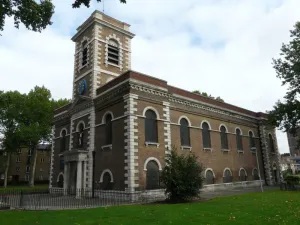
There is a new feeling in Bethnal Green, St. Matthew's Churchyard. The congregation is coming together for a makeover of the garden in the churchyard. It just needs two people to come forward to create a worthwhile project that everyone can be a part of, even if they only admire the efforts of others.
St Dunstans Church has taken a similar course of action, as has St. Annes in Limehouse and Mary Magdalene Church in East Ham, has been prominent in establishing The East Ham Nature reserve.
All of these admirable efforts are to bring nature to the greater population in east London, so we should all support their efforts.
Our local urban environment with all the biodiversity that it holds, is precious. Well done St. Matthews for joining an elite band of people wanting a better living environment for us all.
In 2025 we ran a trial boat trip by taking people up The River Lea to view east London's nature from a different perspective. We experienced the practicalities of such a journey, and feedback from the people aboard indicated that they had enjoyed the trip.
In 2026 we hope to take this one step further by hiring the boat for a longer period of time. Weather permitting, we also hope to have a guided tour of The Lea Marshes. This entire area is a smorgasbord of nature, which must be seen and enjoyed, so we hope that joining with London Rivers Week, we will be enjoying some of the best parts of east London.
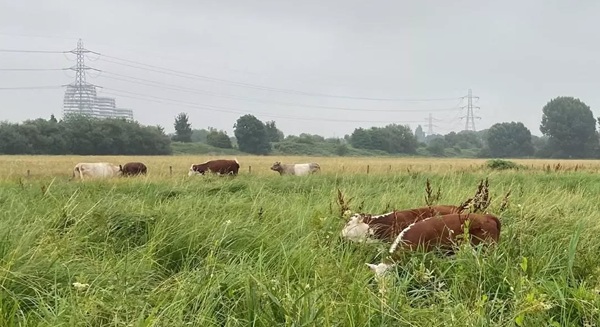
The watercourses and drainage ditches support a diverse range of water plants, including many uncommon species. Among these are river and tubular water-dropwort, whorl-grass, arrowhead, flowering-rush and stream water-crowfoot.
Also, a very rare plant, creeping marshwort, has recently been discovered beside a ditch on Walthamstow Marshes. This is the second of only two sites remaining in the entire country.
Brookweed and blunt-flowered rush, both of which are very rare in London, grow nearby. The wet marshy grassland supports marsh arrowgrass, adder's-tongue fern and the ‘graceful' sedge, a rare hybrid between slender-tufted and lesser pond-sedges.
Drier neutral grassland supports bee orchid, grass vetchling and the nationally scarce yellow vetchling. The Lea Valley is immensely important for its birdlife. The valley holds internationally important numbers of wintering gadwall and shovelers.
Breeding birds include kingfisher, sand martin, little ringed plover, skylark and yellow wagtail. Large numbers of swifts and house martins regularly forage over the water bodies in summer. London's largest grey heron colony breeds on several of the wooded islands in Walthamstow Reservoirs.
The Chingford and Walthamstow Reservoirs are a major refuge for national and regionally important numbers of waterfowl, including tufted duck, great crested grebe, goosander and goldeneye. Nationally rare wintering and passage species are regularly recorded.
The site is very important for the specially-protected water vole, which is locally abundant. The specially-protected great crested newt also occurs and fish include the declining bullhead. The reed beds and other riverside habitats support a number of rare insects. These include several rare wetland moths, such as the dotted fan-foot, Webb's wainscot and brown-veined wainscot.
The emerald and red-eyed damselflies, both scarce in London, also fly here. Otters have returned to the Lee in recent years, and there have been two records in Tower Hamlets.
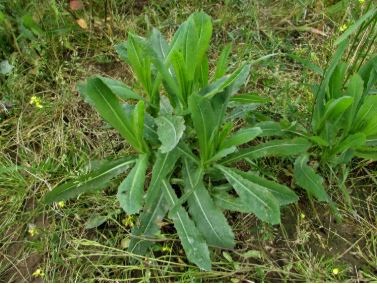
Wild lettuce Lactuca virosa is a tall, leafy biennial plant native to parts of Europe and North America. It belongs to the same genus as common garden lettuce Lactuca sativa but has very different properties.
The plant can grow up to seven feet tall, with serrated green leaves and small yellow flowers. What makes wild lettuce special is its milky white sap, known as lactucarium, which oozes from the stem or leaves when cut. This sap is the source of the plant’s potent pain-relieving properties.
How wild lettuce works as a natural painkiller:
The sap of wild lettuce contains compounds called lactucin and lactucopicrin, both of which exhibit analgesic (pain-relieving) and sedative effects.
Studies show that these compounds work by affecting the central nervous system, much like opium does, but without the risk of addiction or respiratory suppression.
Benefits of Wild Lettuce:
Wild lettuce does not produce a high or euphoric effect, but its calming influence makes it a popular remedy for conditions like arthritis, headaches, menstrual cramps, muscle spasms, and insomnia.
Wild lettuce has been used medicinally for centuries. Ancient Egypt used it as a sleep aid and aphrodisiac. In Greek and Roman times it was used as a powerful sedative and documented by Hippocrates.
In 19th-century Europe and America it was used as an over-the-counter remedy for pain, coughing, and anxiety, and known as lettuce opium. It was even listed in the U.S. Pharmacopoeia in the 1800s as a legitimate treatment for pain and sleeplessness.
How to identify wild lettuce in your backyard:
Wild lettuce grows naturally in fields, roadsides, and even urban lots. It grows 3 to 7 feet tall. Its leaves are long, oblong, and serrated with a bluish-green hue. The sap emits a white, milky substance when the stem is cut and the flowers are small and yellow, forming in clusters. The stem is hollow and green to purplish.
Wild lettuce is often confused with prickly lettuce Lactuca serriola, a close relative. Both have medicinal qualities, but Lactuca virosa has stronger effects. The best time to harvest wild lettuce is late spring to early summer, just before it flowers, when the sap concentration is at its highest.
Use gloves to avoid sticky sap on hands. Cut the stem or larger leaves and collect the milky sap into a glass jar. Dry leaves can be used for tea, while sap is concentrated for tinctures or extracts.
* if not using organic citrus fruit, scrub it well first to remove wax etc
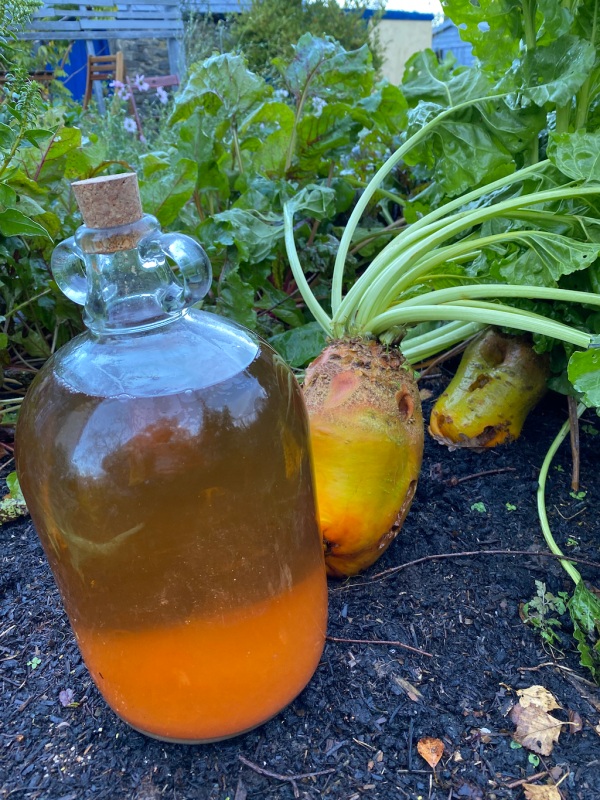
Wash the mangelwurzel root and slice into 2.5cm/1″ pieces. No need to peel.
Place the mangelwurzel slices and citrus peels in a large pan and pour over the water. Bring to the boil and simmer until tender.
Pour the sugar into a fermentation bucket and activate the yeast (if necessary). Strain the contents of the pan carefully over the sugar and add the citrus juices.
Stir until the sugar has dissolved and leave until lukewarm. Then add the yeast. Stir and cover. Leave for 24 hours in a warm place.
Transfer to a sterilised demi john, insert the air lock and leave somewhere warm for 2 to 3 months, to ferment. When fermentation has ceased, siphon off into clean, sterilised bottles, cork and label.
Store for at least a year, preferably two, before drinking.
