
As we make our way through another Summer in London with the weather reaching even higher temperatures, we are unsure how to handle the heat.
One way is to stay as close to tree cover for cooler temperatures which highlights the value of tree cover in central London, where it appears that a greener environment is not at the top of the list for developers.
However, we have successfully challenged developers as we did with The Bethnal Green Mulberry Tree, and more recently the East London Garden Society supported a group of tenants for access to their green space. So, it appears that our intervention has proved a successful way forward after years during which no conversation took place.
Thankfully, it now is and shows that together we can influence those in power.
If you value having someone campaign on your behalf to protect the environment and having access to useful articles about gardening and local environmental matters, please make a donation to help us with the cost of maintaining The East London Garden Society.
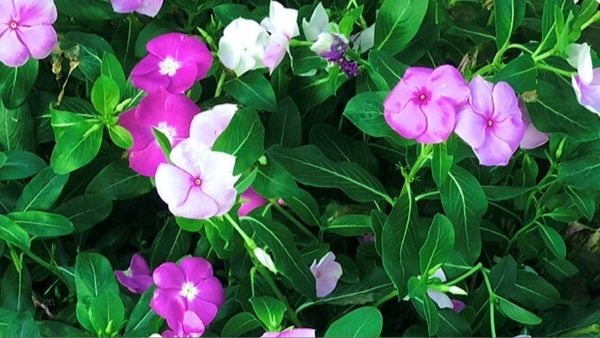
The periwinkle plant has a long history as both a folk remedy and a lifesaver. Native to Madagascar and Europe, this evergreen plant has been used for centuries to treat ailments like diabetes and toothache. In the 1950s, scientists discovered that its compounds successfully treat deadly cancers like leukaemia. Early records show it in folklore dating back to 2600 BC.
Since the 1500s, the word periwinkle has been used as the name of two distinctive items: an edible sea snail and a broadleaf evergreen plant or, in its adjective form, the colour of the flowers of the evergreen plant. Each of these two nouns comes from a distinct root with disparate (though not entirely unrelated) origins.
The name of the plant is a diminutive form of the 12th century English word parvink, which is derived from the Old English word perwince, which is in turn derived from pervinca, the late Latin word for the periwinkle plant.
Pervinca is likely derived from the verb pervincire, which means entwine or bind. More literally, pervincire could be read as thoroughly bound, from per (thoroughly) and vincire (to bind or fetter). This root presumably refers to the way the creeping plant grows, thickly and carpet-like, across the ground or other surfaces, entwining anything in its path.
What does that have to do with snails, you ask? The common periwinkle is a marine mollusc native to the north eastern Atlantic Ocean, particularly the European coastline, though they can now be found on North American coastlines as well, perhaps having travelled over while attached to mid-19th Century sea vessels.
These hitchhiking gastropods were likely called periwinkles as a cultural variation on their old English name, pinewincle. With entirely different origins from parvink, pinewincle is composed of the old English pine, which is derived from the Latin word pina (mussel, originally from the Greek pine), and wincel, which means spiral shell and comes from the Proto-Germanic prefix winkil (bend, curve).
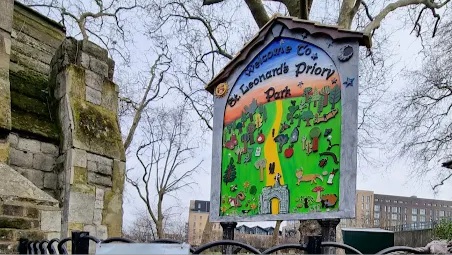
Dr Nicola Stacey commented. “London is full of hidden histories and this corner of Bow has a fascinating medieval past. Once vibrant with gardens, fishponds and brewhouses, it was lost in a dead-end street. We are thrilled to bring back to life its stories of Chaucer’s Tales, the Dissolution of the Monasteries, Huguenot refugees and the bombing of the East End in WW2.
Our Proud Places programme offers a chance for local schoolchildren to get involved in the restoration work itself.”
The gardens, that were once St Leonards Priory, is an area waiting for attention. During a recently attended group at Bow Church it was agreed that something had to be done to create a better garden for all to enjoy. Volunteers will be needed, as well as lots of good ideas. If you are willing to volunteer for this project please contact The East London Garden Society.

Daubeney Fields, which is part of The Great Eastern Parks Route, is one of many local areas of greenery in Hackney. A strong imaginative local group have worked well into 2026 to protect and embellish the local park. Hackney Council in general has a very positive outlook for all its parks and gardens, so why not join your local group and be counted.
Daubeney Fields lies next to the River Lea and Hackney Marshes. Copses, shrubland, a community orchard and amenity grass make it a site of importance for nature conservation. It also has an adventure playground which has been renovated as a natural play area.
Skateboarders renovated a 1980s BMX site and 60 Sakura Cherry Trees were planted in 2020. Residents around the park have made their streets better for nature through a ground-breaking project called 10xGreener, supported by Friends of the Earth. Hackney Council redesigned the park entrances so they merge onto the streets, creating a park without borders.
Daubeney Fields - Hackney's 33rd Green Flag
Explore Tower Hamlets Cemetery Park during the Open House Festival. They are delighted to be taking part again in Open House Festival 2026, London’s much-loved celebration of architecture, landscapes, heritage and the stories that shape our city.
Sunday 13 September 2026 - Tower Hamlets Cemetery Park, Southern Grove, E3
Join them for a guided heritage tour through one of London’s historic Magnificent Seven cemeteries, opened in 1841 and now a remarkable 31-acre Local Nature Reserve where monuments, woodland, meadows and wildlife sit side by side.
Along the way, you will:
Tour times - advanced booking is required:
9am to 10:30am
11am to 12:30pm
1pm to 2:30pm
3pm to 4:30pm
Booking for the tours opens at midday on Wednesday 19 August.
Save the date, invite a friend and explore the Cemetery Park from a whole new perspective.
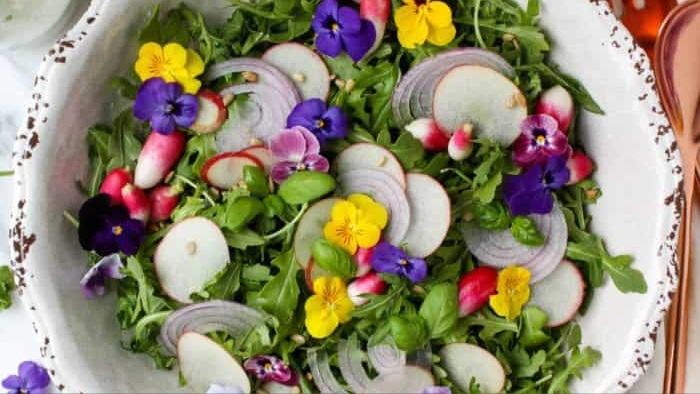
To make a simple and fresh edible flower salad, combine sweet butter lettuce, peppery nasturtiums, and sweet pansies tossed in a light olive oil dressing.
Wash and dry your lettuce leaves, then tear them into bite-sized pieces in a large serving bowl. To make the dressing, whisk together the olive oil, vinegar (or lemon juice), honey, salt, and pepper in a small cup until smooth.
Gently drizzle the dressing over the greens just before serving. Scatter the colourful edible flower petals right across the top so they stay crisp and pretty.