
With 2027 not far away, looking back we will find that gardening has changed, most notably with changing weather patterns.
It is therefore important that as many of us as possible speak up about what concerns them. Those at the 'coal face' understand the impacts of the changes that are happening, so coming together and supporting organisations like The East London Garden Society, or any other group in which we can make a difference, is more important that ever.
Trusting those who don't have the knowledge is not logical.
If you value having someone campaign on your behalf to protect the environment and having access to useful articles about gardening and local environmental matters, please make a donation to help us with the cost of maintaining The East London Garden Society.
The East London Garden Society is proposing that a garden show be organised in east London as an annual event.
The idea is to celebrate the parks and gardens of east London in such a way as to bring all like minded people together to project a better understanding of what many of us are aware of in our urban environment, informing on the positive aspects of gardening, and how to deal with our changing climate.
Many groups and politicians have talked about a climate emergency, so we need to understand the progress made and to be made. This will tell us how we may have to change our gardening practices. Most of all it will be a celebration of all that is good environmentally and which community groups are involved in.
The East London Garden Society puts forward this idea to show how we must not leave it to the uninformed. If you are interested in joining us, please Contact Us and help make a perfect East London Garden Show.
There is great attraction by some, including politicians, on the prospect of having a cyclical economy which in essence means recycling, but many London boroughs have a poor record for complying with the legislation.
For a long time The East London Garden Society has been promoting an organic waste system. By law there must be a food waste recycling scheme in every local authority in the UK, although some local authorities having a special dispensation for a short period of time. No matter what, these laws when enacted will affect us all.
Most groups concerned with recycling believe that there must be a public buy-in for the new laws to work; this is where recycling lets us all down. A recent delivery of these proposals failed in such a way that it was inconceivable for local authorities in London to have even imagined placing such a scheme for the public.
The scheme was to place static bins along the major roads of local boroughs, with a label saying 'Food Waste Only', although we were informed that such a scheme without a community buy-in would not work. The scheme went ahead but all kinds of public waste were place in these bins, so a few months later they were removed. Officers of local authorities were adamant the scheme would work!
We are now approaching the time when the dispensation will end, so we are having further schemes offered by local authorities in London without a public buy-in. Leaving such schemes to those who have to implement them using public funds is no way forward.
The East London Garden Society suggested a practical way of involving the local community with free nutrient rich soil which could be placed within local parks, gardens etc, but unfortunately there is no way to involve people in such matters. Therefore any such scheme involving a cyclical economy will at best be a poor reflection of recycling.
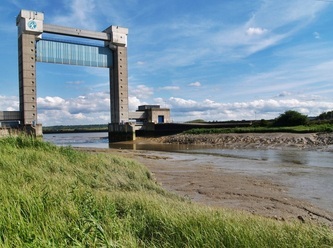
As of today there is no way of crossing the River Roding, where it meets the River Thames. the Great Eastern Parks Route, which follows the River Thames from the City of London and culminating at Purfleet, will require a footbridge crossing.
The value to the local community itself would be invaluable, for there is to be a DLR crossing the River Thames to Thamesmead. There is also an Overground station at Barking Riverside, so such a foot crossing would enable the local population to have access to both stations which serve different parts of London.
From the Great Eastern Parks Route perspective it would enable a walk/travel way through to Purfleet and would enable views alongside the River Thames of the nature and history which has been a part of the greater London experience for centuries.
It is our aim to show how this crossing, linking both Newham and Barking & Dagenham, is possible. The area itself, is frequented by seals, together with other brackish water nature, which is particular to this area of London.
Such a bridge would provide a better living environment in London as a whole, and provide a travel-way going north up the River Roding and east toward Essex.
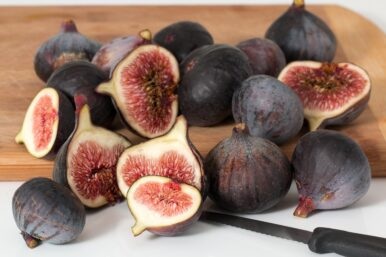
Figs (Ficus carica) are among the oldest cultivated fruits in human history, with evidence of domestication dating back roughly 11,000 years. It was mentioned dozens of times in both the Old and New Testaments of the Bible and symbolizes abundance, peace, and prosperity.
It was introduced to Britain during the Roman era, and later famously cultivated in places like the historic Tarring Fig Gardens in Sussex starting in the 18th century. The Spanish Franciscan missionaries brought fig trees to the Americas in the early 1500s, planting them across California from San Diego to Sonoma.
There are over 750 known species of figs in the world and almost every species of fig tree has its own distinct species of fig wasp to pollinate it. By producing fruit year round, fig trees are the foundation of many rain forests. Figs are high in potassium, calcium, magnesium, iron, and copper, and leaves can be used medicinally for bug bites. It was also used as the very first sweeteners.
Figs are interesting little fruits, if you can even call them that. Technically, it’s a syconium, meaning the flowers grow inside the fruit. That’s what gives them their unique taste and texture. The smoothness of the skin and the crunchiness of the seeds is a wonderful combination; plus they’re sweet and chewy. They come in a range of colours, from green to black, and are delicious fresh or dried.
Figs are the edible fruit of the Ficus carica, a small tree in the Mulberry family. They are indigenous to western Asia, and made their way to the Mediterranean region through human migration. In 1769, the Spanish brought the first fig trees to the region that would later be called California. Historians can date figs to 5000 BCE, it is believed they are one of the first cultivated fruits.
Inside each fig there is a cluster of many flowers, and the seeds are contained in the stem. This unusual arrangement requires a specialized pollinator that’s adapted to navigate its way into the cluster. Each type has its own unique species of wasp to pollinate it too. The co-evolutionary relationship between fig and wasp dates back over 65 million years. Without the help of the wasp, pollination and reproduction would not happen; the two need each other to survive.
How does this work? There is a tiny opening at the tip of the fig, called the ostiole, by this passage the queen gains access to the fig. Once inside, the queen goes from flower to flower laying her eggs and spreading the pollen she brought with her. After she lays her eggs she dies, and the fig then produces an enzyme that digests protein, allowing the queen to nourish the fig. When the eggs hatch, the male and female wasps assume their roles.
The males hatch first to mate with their sisters while the females collect pollen. After the males tunnel their way out, then die, the female follows and goes on to the next fig, to pollinate as a queen. The males spend their whole lifecycle inside a single fruit. It’s a good thing that figs produce an enzyme that digests protein, and can be used as a meat tenderizer!
Before making their way to the Americas, in ancient Greece dried figs were the better part of a daily diet for both rich and poor alike. Ancient Olympians were even awarded figs for their athletic prowess, becoming the first Olympic medal. They believed figs had restorative powers.
We now know that they’re high in fibre, calcium, potassium, and antioxidant vitamins A and K. In addition to being one of the oldest cultivated fruits, figs also have an ancient and mythical way about them. For example, some scholars believe the forbidden fruit picked by Eve was a fig rather than an apple.
In Greek mythology, Zeus turns into a fig tree during the war of the Titans. Buddhists believe that the Buddha found enlightenment while sitting under a fig tree. Throughout history, and around the world, the fig tree has been a symbol of abundance, fertility, peace, and prosperity.
At least 24 hours (up to 3 days) before baking, put the mixed fruit, figs and cherries into a medium pan with the orange zest, juice and sherry. Bring to a simmer, stir, then set aside covered with a well-fitting lid. Stir now and again over the 24 hours.
When ready to bake, preheat the over to 160ºC, (gas mark 3). Grease a 20cm round, deep cake tin with butter, then double-line the base and the sides with baking parchment. Fold 2 sheets of newspaper lengthways, to about the same depth as the tin, then overlap them around the tin and secure with string (this stops the cake from cooking too quickly).
Put the butter and sugar in a large bowl and, using electric beaters, beat until pale and fluffy. Add the eggs, one at a time, beating until completely incorporated before adding the next; add 2 tbsp flour with the last egg.
Tip in the remaining flour, ground almonds, spice and pinch of salt, then fold into the mixture with a large metal spoon or spatula. Fold in the toasted almonds and soaked fruit. Spoon into the prepared tin and level the top. Make a saucer-sized dimple in the middle of the cake with the back of a spoon.
Bake for 1 hour 30 minutes then turn the oven temperature down to 140ºC, gas mark 1 and bake for 1 hour 30 minutes-1 hour 45 minutes, until the cake is evenly risen, dark golden and a skewer inserted into the middle comes out clean. Put the tin on a cooling rack, until just warm. Poke plenty of holes in the top, using a cocktail stick. Mix together the sherry and orange juice for feeding, then brush over the cake.
Once cold, remove the cake from the tin, wrap in clean baking parchment then a layer of foil. Keep in a cool place, until ready to decorate (up to 4 weeks) Unwrap and brush with more sherry and juice weekly, until a few days before Christmas. Or you can decorate the cake straight away.
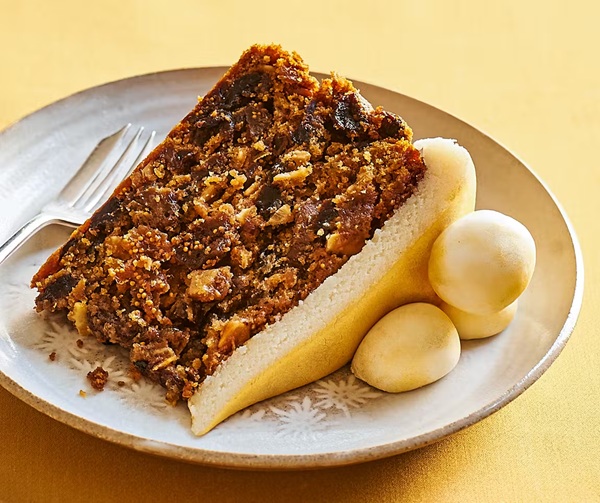
To decorate, unwrap the cake and place it on a board or plate. In a small pan, warm the apricot or marmalade with 1 tsp water, then sieve out any lumps. Brush it across the top of the cake (it acts like a glue). Knead the marzipan using a little icing sugar until soft. Shape into a round, then roll evenly to a 20cm circle using the cake tin base as a guide. Lift it carefully onto the cake and smooth out with your palms until it fits flush to the top. Tap out about 1/2 tsp from the gold lustre spray tube and rub it into the marzipan with your fingers until the surface is smooth and shimmery.
Have a sheet of baking parchment ready. Dust your hands with icing sugar, then pinch pieces of the white fondant and roll into balls of differing sizes (the largest about the size of a small walnut). Put on the baking parchment and spritz all over with gold lustre. Leave to firm up a little. Meanwhile, beat the icing sugar with 3/4-1 tsp water (about 1/2 tsp if using royal icing sugar) until smooth and thick.
Stick a wreath of fondant balls on top of the marzipan, using dots of the icing as glue. Re-spritz the balls (they will still be a paler gold than the marzipan). Tie a ribbon around the base of the cake, and add candles, if you like. Leave to set for a few hours or ideally overnight, before cutting.
Feed the cake after baking, and repeat weekly, with 1 tbsp rich sweet cream sherry and 1 orange juice.

From Shoreditch High Street Station to the RSPB sanctuary at Purfleet, the Great Eastern Park Route takes you north along the River Lea towards Ware in Hertfordshire.
Using this free App will help you discover special nature reserves, historical buildings, and community spots all of which are accessible by boat, walking, or cycling.